
-
Archives
- March 2025
- February 2024
- April 2023
- December 2022
- October 2019
- August 2019
- April 2019
- February 2019
- December 2018
- October 2018
- July 2018
- April 2018
- March 2018
- February 2018
- December 2017
- November 2017
- October 2017
- September 2017
- August 2017
- July 2017
- June 2017
- May 2017
- April 2017
- March 2017
- February 2017
- January 2017
- December 2016
- November 2016
- October 2016
- September 2016
- August 2016
- July 2016
- June 2016
- May 2016
- April 2016
- March 2016
- February 2016
- January 2016
- December 2015
- November 2015
- October 2015
- September 2015
- August 2015
- July 2015
- June 2015
- May 2015
- April 2015
- March 2015
- February 2015
- January 2015
- December 2014
- November 2014
- October 2014
- September 2014
- August 2014
- July 2014
- June 2014
- April 2014
- March 2014
- February 2014
- January 2014
- December 2013
- November 2013
- October 2013
- September 2013
- August 2013
- July 2013
- June 2013
- May 2013
- April 2013
- March 2013
- February 2013
- January 2013
- December 2012
-
Meta
Monthly Archives: April 2013
A to Z Challenge: L is for Luck
© 2013 by Raymond Alexander Kukkee
[caption id="attachment_1247" align="aligncenter" width="800"]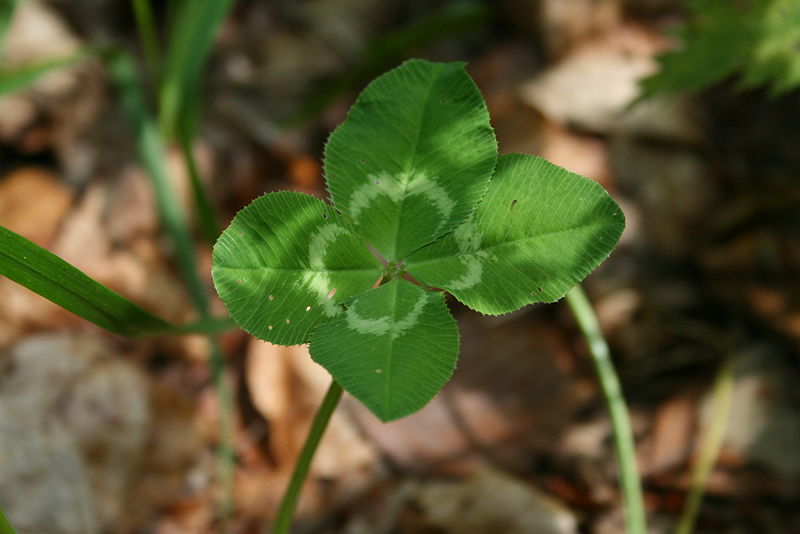 Symbol of Luck: 4-Leaf Clover[/caption]
"L is for Luck." It is often said that "luck is what you make it". "The harder you work the luckier you get". " Lady Luck is on our side". Perhaps those assumptions are true at times. The multi-billion-dollar gaming industry is built upon the eternal quest for luck.
Sometimes luck has nothing to do with it. In a positive light, planning creates a superior outcome. Determination and insistence, resolve to never give up can culminate in the desired result. Great concepts and ideas, innovation can shape predictable circumstance. Human genius can modify.
Humans can deviously manipulate outcomes that might be ordinarily left to luck. Electronic bandits in casinos are programmed to favour the house, a fact unknown to many customers. The odds are weighted against their being successful. Is 'winning' on a machine that has been programmed to steal from the player 'luck'? No. Sadly, It is a predictable outcome. The rich gaming industry thrives on it's manipulated, predictable outcome that has nothing to do with luck.
Fortune can and does change upon occasion. At times for the better. The wind changes direction. Fortuitous, wonderful things can occur. Being in the right place at the right time. Stumbling across good fortune. Lady Luck is always dancing in the wings in your theatre of life. Hope. Dreams. Suspension of reality. Wishful thinking. A huge lottery coming up, I'll get a ticket. I may even win when I toss reality to the wind.
That's why 'L' is for Luck.
Is that Incoming I hear?
Photo Credit: Valerie Imre Wikipedia commons
+
Symbol of Luck: 4-Leaf Clover[/caption]
"L is for Luck." It is often said that "luck is what you make it". "The harder you work the luckier you get". " Lady Luck is on our side". Perhaps those assumptions are true at times. The multi-billion-dollar gaming industry is built upon the eternal quest for luck.
Sometimes luck has nothing to do with it. In a positive light, planning creates a superior outcome. Determination and insistence, resolve to never give up can culminate in the desired result. Great concepts and ideas, innovation can shape predictable circumstance. Human genius can modify.
Humans can deviously manipulate outcomes that might be ordinarily left to luck. Electronic bandits in casinos are programmed to favour the house, a fact unknown to many customers. The odds are weighted against their being successful. Is 'winning' on a machine that has been programmed to steal from the player 'luck'? No. Sadly, It is a predictable outcome. The rich gaming industry thrives on it's manipulated, predictable outcome that has nothing to do with luck.
Fortune can and does change upon occasion. At times for the better. The wind changes direction. Fortuitous, wonderful things can occur. Being in the right place at the right time. Stumbling across good fortune. Lady Luck is always dancing in the wings in your theatre of life. Hope. Dreams. Suspension of reality. Wishful thinking. A huge lottery coming up, I'll get a ticket. I may even win when I toss reality to the wind.
That's why 'L' is for Luck.
Is that Incoming I hear?
Photo Credit: Valerie Imre Wikipedia commons
+
Symbol of Luck: 4-Leaf Clover[/caption]
"L is for Luck." It is often said that "luck is what you make it". "The harder you work the luckier you get". " Lady Luck is on our side". Perhaps those assumptions are true at times. The multi-billion-dollar gaming industry is built upon the eternal quest for luck.
Sometimes luck has nothing to do with it. In a positive light, planning creates a superior outcome. Determination and insistence, resolve to never give up can culminate in the desired result. Great concepts and ideas, innovation can shape predictable circumstance. Human genius can modify.
Humans can deviously manipulate outcomes that might be ordinarily left to luck. Electronic bandits in casinos are programmed to favour the house, a fact unknown to many customers. The odds are weighted against their being successful. Is 'winning' on a machine that has been programmed to steal from the player 'luck'? No. Sadly, It is a predictable outcome. The rich gaming industry thrives on it's manipulated, predictable outcome that has nothing to do with luck.
Fortune can and does change upon occasion. At times for the better. The wind changes direction. Fortuitous, wonderful things can occur. Being in the right place at the right time. Stumbling across good fortune. Lady Luck is always dancing in the wings in your theatre of life. Hope. Dreams. Suspension of reality. Wishful thinking. A huge lottery coming up, I'll get a ticket. I may even win when I toss reality to the wind.
That's why 'L' is for Luck.
Is that Incoming I hear?
Photo Credit: Valerie Imre Wikipedia commons
+ A-Z Challenge: K is for Kiln
© 2013 Raymond Alexander Kukkee
 K is for Kiln. Handy, but especially useful for the crafts-oriented individual, a kiln can be used to make glass, form and cast glass, melt metals, apply melted glazes, and manufacture ceramic and porcelain articles of all types. Yes, you too can make your own unique ceramic coffee mug, pottery, teapots, dishes and decorative ceramic art if you have access to a kiln.
A simple kiln can even be constructed, building an enclosure made of clay or loosely-assembled fire brick. A kiln may be heated with any available fuel source including electric heating coils, wood-fired, natural gas, or coal. Many commercial models of kilns are available.
In operation, kiln temperatures of over 2500 F (1400 C) can be achieved. The temperature is carefully controlled to a specific rate of increase and the final temperature desired is predetermined by the characteristics of the clay or porcelain being used.
Temperatures are controlled with 'kiln sitters' which themselves may be electronically controlled by using 'cones' which melt, at a specific temperature, dropping a mechanical switch and shutting down the kiln heating system when the desired temperature is achieved.
With the temperature carefully controlled, dried clay objects called 'greenware' are bisque-fired, brought to high temperature to bake and cure the clay body. Depending upon the characteristic chemical content of the clay body itself and the temperature achieved in the kiln, components of the clay melt and fuse in a process called vitrification. Vitrification begins at approximately 1450 F (700 C) and carbonaceous materials in the clay body burn off.
[caption id="attachment_1238" align="alignleft" width="584"]
K is for Kiln. Handy, but especially useful for the crafts-oriented individual, a kiln can be used to make glass, form and cast glass, melt metals, apply melted glazes, and manufacture ceramic and porcelain articles of all types. Yes, you too can make your own unique ceramic coffee mug, pottery, teapots, dishes and decorative ceramic art if you have access to a kiln.
A simple kiln can even be constructed, building an enclosure made of clay or loosely-assembled fire brick. A kiln may be heated with any available fuel source including electric heating coils, wood-fired, natural gas, or coal. Many commercial models of kilns are available.
In operation, kiln temperatures of over 2500 F (1400 C) can be achieved. The temperature is carefully controlled to a specific rate of increase and the final temperature desired is predetermined by the characteristics of the clay or porcelain being used.
Temperatures are controlled with 'kiln sitters' which themselves may be electronically controlled by using 'cones' which melt, at a specific temperature, dropping a mechanical switch and shutting down the kiln heating system when the desired temperature is achieved.
With the temperature carefully controlled, dried clay objects called 'greenware' are bisque-fired, brought to high temperature to bake and cure the clay body. Depending upon the characteristic chemical content of the clay body itself and the temperature achieved in the kiln, components of the clay melt and fuse in a process called vitrification. Vitrification begins at approximately 1450 F (700 C) and carbonaceous materials in the clay body burn off.
[caption id="attachment_1238" align="alignleft" width="584"] Clay bowls - Green ware awaiting firing in the Kiln[/caption]
The green ware, dry, but still fragile clay, once bisque-fired, becomes durable ceramic. It is then cooled slowly to prevent cracking or shattering, and is subsequently decorated and coated with glazes of various formulations that vary to create specific finishes and colors. When re-heated carefully one or more times for applications of one or more glazes, the surfaces melt completely, leaving the surface flawless, glassy, waterproof, and extremely durable.
Utilitarian tiles of all descriptions and industrial parts, fittings, nozzles, and accessories of all kinds can similarly be manufactured from clay and other materials using a kiln.
Ceramic items whether high-grade porcelain, stoneware, or lowly earthenware, are highly durable and can last for centuries --all because of a kiln. That's why K is for Kiln.
Is that Incoming I hear?
1. Photo: A Paragon electric kiln
2. Photo: Greenware by author
+
Clay bowls - Green ware awaiting firing in the Kiln[/caption]
The green ware, dry, but still fragile clay, once bisque-fired, becomes durable ceramic. It is then cooled slowly to prevent cracking or shattering, and is subsequently decorated and coated with glazes of various formulations that vary to create specific finishes and colors. When re-heated carefully one or more times for applications of one or more glazes, the surfaces melt completely, leaving the surface flawless, glassy, waterproof, and extremely durable.
Utilitarian tiles of all descriptions and industrial parts, fittings, nozzles, and accessories of all kinds can similarly be manufactured from clay and other materials using a kiln.
Ceramic items whether high-grade porcelain, stoneware, or lowly earthenware, are highly durable and can last for centuries --all because of a kiln. That's why K is for Kiln.
Is that Incoming I hear?
1. Photo: A Paragon electric kiln
2. Photo: Greenware by author
+
K is for Kiln. Handy, but especially useful for the crafts-oriented individual, a kiln can be used to make glass, form and cast glass, melt metals, apply melted glazes, and manufacture ceramic and porcelain articles of all types. Yes, you too can make your own unique ceramic coffee mug, pottery, teapots, dishes and decorative ceramic art if you have access to a kiln.
A simple kiln can even be constructed, building an enclosure made of clay or loosely-assembled fire brick. A kiln may be heated with any available fuel source including electric heating coils, wood-fired, natural gas, or coal. Many commercial models of kilns are available.
In operation, kiln temperatures of over 2500 F (1400 C) can be achieved. The temperature is carefully controlled to a specific rate of increase and the final temperature desired is predetermined by the characteristics of the clay or porcelain being used.
Temperatures are controlled with 'kiln sitters' which themselves may be electronically controlled by using 'cones' which melt, at a specific temperature, dropping a mechanical switch and shutting down the kiln heating system when the desired temperature is achieved.
With the temperature carefully controlled, dried clay objects called 'greenware' are bisque-fired, brought to high temperature to bake and cure the clay body. Depending upon the characteristic chemical content of the clay body itself and the temperature achieved in the kiln, components of the clay melt and fuse in a process called vitrification. Vitrification begins at approximately 1450 F (700 C) and carbonaceous materials in the clay body burn off.
[caption id="attachment_1238" align="alignleft" width="584"] Clay bowls - Green ware awaiting firing in the Kiln[/caption]
The green ware, dry, but still fragile clay, once bisque-fired, becomes durable ceramic. It is then cooled slowly to prevent cracking or shattering, and is subsequently decorated and coated with glazes of various formulations that vary to create specific finishes and colors. When re-heated carefully one or more times for applications of one or more glazes, the surfaces melt completely, leaving the surface flawless, glassy, waterproof, and extremely durable.
Utilitarian tiles of all descriptions and industrial parts, fittings, nozzles, and accessories of all kinds can similarly be manufactured from clay and other materials using a kiln.
Ceramic items whether high-grade porcelain, stoneware, or lowly earthenware, are highly durable and can last for centuries --all because of a kiln. That's why K is for Kiln.
Is that Incoming I hear?
1. Photo: A Paragon electric kiln
2. Photo: Greenware by author
+
Clay bowls - Green ware awaiting firing in the Kiln[/caption]
The green ware, dry, but still fragile clay, once bisque-fired, becomes durable ceramic. It is then cooled slowly to prevent cracking or shattering, and is subsequently decorated and coated with glazes of various formulations that vary to create specific finishes and colors. When re-heated carefully one or more times for applications of one or more glazes, the surfaces melt completely, leaving the surface flawless, glassy, waterproof, and extremely durable.
Utilitarian tiles of all descriptions and industrial parts, fittings, nozzles, and accessories of all kinds can similarly be manufactured from clay and other materials using a kiln.
Ceramic items whether high-grade porcelain, stoneware, or lowly earthenware, are highly durable and can last for centuries --all because of a kiln. That's why K is for Kiln.
Is that Incoming I hear?
1. Photo: A Paragon electric kiln
2. Photo: Greenware by author
+
Posted in Crafts and skills, How To..., Life
2 Comments